Stop Hiding Behind the Hops
 Watch on YouTubeStop Hiding Behind the HopsWhen a gluten-free beer buries itself under hops and fruit, that's a tell. AI-generated from this page and reviewed for accuracy.
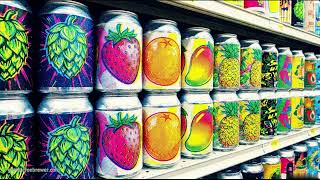
Walk the gluten-free shelf and count the raspberry IPAs. Then ask why a category that struggles to make beer taste like beer keeps reaching for the two loudest ingredients on the shelf.
It isn't a coincidence, and it isn't fashion. Hops and fruit are the cheapest way to make a beer taste like something when it doesn't taste like beer.
Where the emptiness comes from
Build a beer on syrup, extract, and adjunct sugar and you get alcohol and gravity — and not much else. No grain depth, no toast, no body worth the name, nothing to stand on. That beer isn't bad because the brewer is bad. It's thin because nothing in it was ever malt.
So the hops go up. Then the fruit goes in. The beer now has a flavor, and the flavor is hops and fruit, and nobody has to talk about the hole in the middle.
What the disguise costs
Three things, and they compound:
It confirms what people already suspect. Every gluten-free beer that only works as a novelty teaches a drinker that gluten-free beer isn't real beer. That belief is the category's biggest problem, and we keep funding it.
It trains the wrong expectations. A shelf full of loud beers tells drinkers gluten-free means loud. The person who wants a clean lager after work leaves empty-handed and doesn't come back.
It hides the actual problem. You can't fix a malt foundation you refuse to look at. Cover the hole for five years and you'll have five years of experience covering a hole.
The real test: styles with nowhere to hide
Here's the honest measure of a gluten-free brewery. Brew a helles. A Kölsch. A Märzen. A clean pilsner, a brown ale, a porter whose roast isn't doing all the work.
Those beers have no place to put a mistake. There's no hop wall, no fruit, no haze, no adjunct sweetness to sit behind. If the malt isn't there, the glass says so before the second sip. That's exactly why they're worth chasing — and why hitting one is worth more than a hundred raspberry IPAs.
Malted sorghum makes that possible. That's the whole reason this site treats malt as the soul of beer and hands conversion to external enzymes: so the malt is free to be flavor instead of a fermentable-sugar delivery system.
In our commercial experience, German hops, German yeast, and German recipes worked especially well with sorghum malt — which makes sense, because that tradition is built for beers where the malt is supposed to be audible. Restrained bitterness, clean fermentation, balance over domination: the same qualities that let sorghum malt speak. See Hops and Yeast for Sorghum Malt.
That's a starting point, not a fence. English ales, American classics, Czech lagers, Belgian styles — anything that asks the malt to show up is fair game, and we'd rather someone prove us wrong with a style we never tried than stay inside our lane.
What this is not
This isn't anti-hop, and it isn't anti-fruit.
A genuinely good gluten-free IPA is a genuinely good beer, and hops are wonderful when they're the point. Fruit built on top of real malt is a fruit beer — an honest one, with a foundation under it.
The question isn't whether hops or fruit are in the beer. It's simpler and harder than that:
Take the mask off. Is there still a beer under there?
If the answer is yes, brew whatever you want. If the answer is no, the recipe isn't the problem — the foundation is, and that's a fixable problem with real malt, a designed conversion system, and enough patience to make the base taste like something before you dress it.
Related
- Malt Matters
- Malting Overview
- Hops and Yeast for Sorghum Malt
- Tavern Ale, Version A — honey, toast, and restrained hops, balanced instead of buried
- Why Sorghum Malt Is the Star