Our positionThis is where we stand, and why. The reasoning is on this page. · The full position record
Cross-Contact Prevention
The control table
| What to control | Target or starting point | How drift shows | What to do |
|---|---|---|---|
| Equipment path | Dedicated; shared only with a documented changeover system | Nobody can say what ran on the path before | Dedicate the path, or document the changeover and verify it |
| Cleaning records | Lot, path, previous material, steps, verification, who released, and the decision | Cleaning that lives in memory | No record, no release |
| Schedule position | First run after the brewery's full weekly clean | A gluten batch immediately before yours | Negotiate the slot, not only the procedure |
| The upstream boundary | Supplier qualification, lot identity, retained samples, and cleaning logs before acceptance | An ingredient that arrives without proof it was protected | Ask before acceptance, not after |
| Red flags | None | Shared intake with no cleanout; unlabelled temporary storage; re-bagging; equipment that cannot be inspected | Hold the lot and investigate |
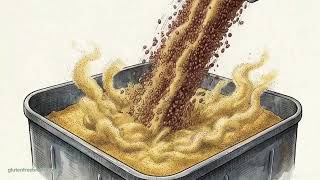 Watch on YouTubeHow Gluten Gets Into Gluten-Free GrainGluten does not arrive in gluten-free grain by accident of nature. It arrives by contact. AI-generated from this page and reviewed for accuracy.
Cross-contact prevention is a supply-chain and equipment-control system. It starts before grain enters the brewery and continues through sourcing, transport, storage, milling, malting, brewing, packaging, and release.
The operating model we trust is simple to describe and hard to fake: qualified gluten-free suppliers, verified receiving, segregated storage, dedicated or validated equipment paths, documented cleaning, and batch release only after the records make sense.
Why we take this position
Position. Prefer dedicated gluten-free equipment. Where equipment is shared, the burden of proof is on you: a documented changeover system, inspection points, validation where it matters, and a release decision before gluten-free material moves. Cleaning without records is not a control. The control starts upstream, at the supplier and the receiving dock, not at the final test.
Basis. Commercial production experience in a dedicated facility, the Truly Gluten-Free doctrine this site is built on, and published evidence on how gluten grain actually shows up in gluten-free commodities.
Why. A celiac drinker is trusting a claim they can't check. A finished-beer test can only confirm what a clean system already did — it can't find the one barley kernel in a conveyor after the fact, and fermented-matrix assays have known limits. Dedicated paths remove the hardest questions before anyone has to answer them. Records are what make a shared path defensible, because memory is not a control.
The problem forcing it. There is no validated, affordable evidence chain that proves a shared-facility beer was protected batch by batch. Until there is, the only control a reader can fully trust is a dedicated one. That problem is on the frontier, and this site publishes no workaround for it.
Compensation or ideal? The ideal, for dedicated equipment. The shared-equipment rules are a compensation: they exist because most breweries are not dedicated, and they set the minimum a shared path must prove.
Evidence.
- Four years of dedicated-facility production with stage-by-stage records and 21 recorded gliadin-negative results — commercial experience that the dedicated system holds (Production QA Log).
- Visual examination finds gluten-containing grain in gluten-free oats, seeds, and pulses at rates that make upstream control, not final testing, the decisive step — peer-reviewed.1
- Limiting evidence: we have not operated a shared facility under this standard, so the shared-equipment rules are judgment about what would be needed, not a validated protocol.
Open contradictions. None.
What would change our position. A validated shared-facility protocol with batch-level evidence at scale would let this site publish a shared-facility path with confidence. The preference for dedicated equipment would stand; what would change is whether a shared path can be recommended rather than merely permitted.
Related research asks. None open. The problem beside this position — verifying a gluten-free claim in a shared facility — is the one that would need an ask.
Commercial interests. None relevant. Craig Belser's royalty interest in Bard's-licensed recipes does not bear on equipment or facility control.
Consequence if wrong. Safety. A cross-contact failure harms a person. This position may never be softened on practitioner observation, and no shared-facility workaround is published here.
Decision owner and status. Craig Belser · Current · last reviewed August 2026.
History. None recorded.
Dedicated equipment matters
Dedicated gluten-free equipment is the strongest control, because it removes the hardest questions before anyone has to answer them. Nobody has to explain hidden grain dust from a previous run, residue in an intake conveyor, or barley kernels caught somewhere in a shared system.
We prefer dedicated paths. Shared equipment is not automatically disqualifying, but it's higher risk, and it puts the burden of proof on you. If you run shared equipment you need a documented changeover system, inspection points, validation where it matters, and a release decision before gluten-free material moves forward.
Whether the equipment looks clean is the wrong question. The question is whether your control system can prove the lot was protected.
What to do about it
Cross-contact prevention is not perfection theater. It is a system where risks are known, controls are visible, records support the claim, and every lot can be traced through the equipment that touched it.
The gluten-free promise starts upstream. If you can't show where the grain has been, you don't have one.
Cleaning records matter
Cleaning without records is memory. Memory is not a gluten-free control.
A useful cleaning record should connect:
- the lot being handled;
- the equipment path used;
- the previous material on that path;
- the cleaning or changeover steps performed;
- the inspection or verification result;
- the person who released the equipment;
- any hold, correction, re-clean, rejection, or release decision.
Records don't make the beer safe by themselves. They make the control system visible enough to trust and improve.
Schedule position is a control
Here's a cross-contact control that costs nothing and, in our experience, almost nobody uses: calendar position. In Bard's contract brewing, we knew every brewery fully cleaned its systems once a week — so we made sure our brews were first in line after that cleanout. Same equipment, same shared facility, radically different exposure: by design, the gluten-free brew ran on the cleanest system state the facility's cycle offered.
If you brew gluten-free on shared or contract equipment, negotiate the schedule slot, not just the cleaning procedure. The procedure tells you the system gets clean; the slot decides what runs through it between the cleaning and your brew.
The upstream boundary
This page owns cross-contact from grain acceptance onward — mills, storage, malt house, brewhouse, packaging. Everything before acceptance — the field rotation, the combine, the farm bin, the truck, the elevator — is owned by Agricultural Cross-Contamination, and it deserves its own page because those risks are the ones almost nobody questions. Acceptance is the handoff: the ag page's questions get answered and recorded, then this page's controls take over.
Shared equipment creates trust and safety risk
Gluten is not visible in a way an operator can rely on. Dust in a conveyor, grain trapped under a screen, residue in a pipe joint, or a reused tote with weak documentation can compromise a gluten-free lot even when the material looks normal.
High-risk points include:
| Risk point | What can go wrong | Control to expect |
|---|---|---|
| Receiving pits, scales, and intake conveyors | Prior grain dust or unverified transport history enters the lot | Arrival inspection, clean intake path, prior-load checks, and lot identity |
| Grain cleaners, screens, magnets, and aspirators | Trapped kernels or dust carry over between lots | Cleanout access, screen inspection, dust control, and removal records |
| Silos, totes, bags, and temporary storage | Re-bagging or intermediate storage breaks identity | Segregated storage, no unmarked containers, labels at every transfer |
| Mills, augers, elevators, hoses, and tools | Shared handling equipment becomes the hidden transfer route | Dedicated or color-coded tools, validated changeover, and contact-surface inspection |
| Steep tanks, germination boxes, kilns, and ducts | Moisture, grain mats, rootlets, or dust hide in hard-to-clean areas | Drainable design, cleanout access, surface inspection, and sanitation records |
| Packaging and loadout | Finished product is exposed after successful processing | Verified containers, clean packaging area, sealed shipment records |
The earlier the control fails, the more expensive the correction becomes.
Malting and grain handling are upstream controls
Gluten-free control is not only a brewhouse issue. Grain handling and malting equipment can create cross-contact problems long before brewing starts.
Receiving, conveying, cleaning, steeping, germination, kilning, cooling, packaging, and loadout all touch the grain before you ever see it. If that equipment path is shared, dirty, undocumented, or poorly segregated, your finished beer inherits the risk.
That's why supplier qualification, lot identity, retained samples, cleaning logs, and release records belong in the gluten-free system. You should know whether the ingredient was protected before it arrived.
Practical red flags
- Shared intake or conveying equipment with no documented cleanout.
- Grain transferred through temporary storage without lot labels.
- Re-bagging or rework that mixes lots or breaks traceability.
- Equipment that cannot be inspected where grain, dust, or moisture can collect.
- Cleaning logs completed after the fact.
- Gluten-free runs scheduled after high-risk materials without validated sequencing.
- Returned containers, totes, scoops, or packaging reused without verification.
- Staff relying on memory instead of written release criteria.
What the evidence supports
The control model on this page follows established food-allergen and gluten-free supply-chain principles: prevent unintended transfer, identify the material and equipment path, validate the control where needed, and keep records that support release.
- Cross-contact is a preventive-control problem — FDA's current good manufacturing practice and preventive-controls rule requires controls against allergen cross-contact and contamination during manufacturing, packing, and holding: 21 CFR Part 117.
- Supply-chain controls must be tied to hazards and suppliers — FDA's preventive-controls guidance describes hazard analysis, sanitation controls, supply-chain programs, verification, corrective action, and records as parts of one food-safety system: FDA, Hazard Analysis and Risk-Based Preventive Controls for Human Food.
- Representative sampling and process controls matter in gluten-free grain systems — a study of mechanically sorted oats found that control performance and representative sampling both affect the meaning of a gluten result: Allred et al. (2018).1
None of these sources declares shared equipment automatically safe or unsafe. Our preference for dedicated paths is a risk-reduction judgment under the Truly Gluten-Free standard, not a regulatory requirement — and a shared path still has to be controlled and verified for the actual facility.
Related topics
- Dedicated Equipment and Facilities
- Batch Records and Ingredient Proof
- Lot Identity and Traceability
- Truly Gluten-Free