How Big Is the US Gluten-Free Beer Market?
This is the first question every brewer asks and the one the market has answered worst. The commercial reports price the same market anywhere from under a billion dollars to over eighteen billion, more than twenty times apart, and none of them measured a customer. We checked. So we built the number ourselves, from the one dataset in this category that counted people instead of extrapolating them, priced at the shelf price gluten-free beer actually commands.
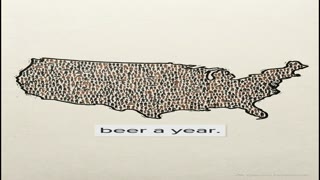 Watch on YouTubeThe US Gluten-Free Beer Market: 12 Million People, 27 Million Cases a YearHow the estimate is built, in a minute: the audience, the drinking rate, the cases.
Our position
Gluten Free Brewer is the record of more than twenty years in gluten-free beer. Bard's put gluten-free beer on shelves across North America in 2004 and kept it there through 2020, and the production record on this site is what that looks like from the inside. That is the experience this estimate is read through. Read it that way.
The number below is ours. It is not a study finding and we do not dress it up as one. It is arithmetic on measured inputs, with three assumptions we make in the open, and it is the number we would plan a brewery on.
Where the inputs come from
Every population and behaviour input is a measured figure from a 2019 target-audience research study built on MRI (Mediamark Research) syndicated consumer data, the syndicated survey the beverage industry itself plans media on. The study defined four audiences and sized each one in MRI's own sample, then checked the three health audiences against the peer-reviewed prevalence literature (celiac prevalence in the American Journal of Gastroenterology; non-celiac gluten sensitivity in Catassi et al., Nutrients, and Lundin and Alaedini, Gastrointestinal Endoscopy Clinics; wellness buyers against Mayo Clinic Proceedings). For the two need-based audiences the measured counts run below the literature, which is why we call these figures conservative. The full readout, every pool and every filter, is on What the 2019 Audience Research Found.
The study is not this site's own research. It is the best measurement of this customer that exists in our record, and the pedigree above is why we build on it rather than on a paid report.
The price is ours, and it is current. The study planned at $10.99 a six-pack in 2019. Gluten-free beer does not sell at an average craft price; it has sold at parity with the top of the craft shelf for as long as this site's authors have been in the category, and the shelf says so today. The pricing section below shows the listings.
The estimate, step by step
| Step | Figure | What it is |
|---|---|---|
| Three health audiences, national, as measured | 2.0M + 3.6M + 10.2M = 15.8M | Food-allergy and gluten-free buyers; gluten-sensitive buyers; wellness buyers. 2019 MRI counts. These overlap. |
| Overlap removed | ≈ 12.0M people | The study's own overlap adjustment (below) applied to the national pools. |
| Who drink craft beer or hard cider | × 38% = ≈ 4.6M people | The study's measured rate for this audience. |
| At the study's median drinking rate | × 12 glasses per 30 days = ≈ 55M glasses a month | Three glasses a week, as the study measured and applied it. |
| As cases of twenty-four 12-oz | ÷ 24 = ≈ 2.3M cases a month | One glass counted as one 12-oz serving, the study's own conversion. |
| Per year | × 12 = ≈ 27 million cases | About 110 million six-pack equivalents. |
| At today's high-end craft price | × $60 a case = ≈ $1.6 billion of beer a year at 100 percent penetration | $14.99 a six-pack, four six-packs to the case; the pricing section shows where that comes from. |
What a brewery takes of that is a penetration assumption, and the ladder makes the point better than any single number:
| Market penetration | Cases a year | Shelf revenue at $60 a case |
|---|---|---|
| 1% | ≈ 275,000 | ≈ $16 million |
| 5% | ≈ 1.4 million | ≈ $82 million |
| 10% | ≈ 2.7 million | ≈ $165 million |
| 20% | ≈ 5.5 million | ≈ $329 million |
| 100% | ≈ 27.5 million | ≈ $1.6 billion, the whole market |
Every dollar figure on this page is a shelf value at a stated penetration. Move the penetration and the answer moves with it, which is why the honest use of this page is to run the model with your own penetration, your own price and your own territory. Revenue Scenarios walks the mechanics on the study's original 2019 inputs.
The price: modeled on high-end craft
The study's $10.99 six-pack was a 2019 planning price, and it was an average-craft price even then. Gluten-free beer is not sold at average craft prices. It has priced with high-end craft for as long as this site's authors have been in the category, and a single retailer's gluten-free shelf, read on 23 September 2026, shows the market as it stands:
| Listing (South Lyndale Liquors, Minneapolis, 2026-09-23) | Pack | Six-pack equivalent | Case of 24 |
|---|---|---|---|
| Ghostfish Grapefruit IPA, Vanishing Point Pale Ale, Meteor Shower Pale Lager | 4 × 12 oz, $13.99 | $20.99 | $84 |
| Holidaily Fat Randy's IPA | 4-pack, $14.99 | $22.49 | $90 |
| Hinterland Saving Gracie Oatmeal Stout | 4-pack, $14.99 | $22.49 | $90 |
| Greens IPA, Amber, Lager | 4 × 11.2 oz, $14.99 | $24.09 | $96 |
| Holidaily Darty Lager | 6 × 12 oz, $16.99 | $16.99 | $68 |
| Lakefront New Grist Pilsner, IPA | 6 × 12 oz, $10.99 | $10.99 | $44 |
Read that table the way a buyer does, not the way a spreadsheet does. A four-pack prices higher per can than a six-pack, and a case prices lower per can than either, so a four-pack sticker multiplied out is not a case price. We model on the six-pack, the package the 2019 planning price was set on and the package a case of twenty-four is four of: $14.99 a six-pack, $60 a case, $2.50 a can. That is a high-end craft six-pack price. It sits under the top gluten-free six-pack on that shelf and at the four-packs' sticker, and it is where Bard's priced through its years on the shelf, at parity with the top of the craft list. The 2019 planning price was $10.99 a six-pack, $44 a case. That is not inflation; that is the category priced where it sells.
One retailer is one retailer. The listing is cited so that the price can be argued with, and a brewery should replace it with its own shelf. It should not replace it with an average-craft number, because that is not where this beer sells.
 Watch on YouTubePrice Gluten-Free Beer With Your Best Craft Beer, Not Below ItWhy this category prices at the top of the craft shelf rather than under it.
The three assumptions, named
1. The overlap factor. The three health audiences are not additive; one person can sit in all three. The study removed that overlap once, at the step where it cut to its focus regions and the millennial band: 2,748,000 raw across the three groups became 2,094,000 adjusted, a factor of about 0.76. We apply that factor to the national pools. It is the study's own adjustment used on a wider population than it was measured on, and it is the only overlap figure in the record.
2. The drinking rate and the craft-or-cider share, applied to all ages and all regions. The study measured three glasses a week and a 38 percent craft-or-cider rate on its millennial target in five census divisions. We apply both nationally and across ages. The study's own demographics say which way that cuts: the gluten-sensitive audience skews older and drinks less craft beer; the wellness audience drinks more. We take the rates as printed rather than guess at a correction, and we say so here.
3. The price. $60 a case is $14.99 a six-pack, a high-end craft six-pack price, bracketed by the gluten-free listings on one retailer's shelf on the date above. It is a retail value, not what a brewery banks: distributor and retailer margins sit between the shelf and the brewery. Use your own price and your own margin structure.
What we left out, on purpose. The study added a 60 percent spouse-and-partner step, because the gluten-free drinker is often not the person paying. We leave it out. The one drinker who decides where the table drinks is real, and it is upside on top of this number, not inside it. We also leave out the study's fourth audience, 12.6 million craft-beer authorities, because they do not need gluten-free beer; they recommend it. Both exclusions make this estimate smaller than it could be. That is deliberate.
Why this is bigger than the study's own number
The study's own funnel lands on about 1.3 million people and, at its 2019 price and a 3 percent share of its volume, about $10 million a year. Ours lands on 12 million people and, at 1 percent penetration at today's price, about $16 million. Same population inputs, same arithmetic. The difference is three cuts the study made that a national estimate does not (it kept only five census divisions, it kept only the millennial band, and it kept the spouse step in while we keep it out) and a price that reflects where gluten-free beer actually sells. The study was sizing a launch target for one brand in its first regions. We are sizing the country.
Both numbers are on this site because both are useful. The 1.3 million is what one brand could reach from a standing start in 2019. The 12 million is the market that brand was reaching into.
What to do with it
Cut it to your territory. Take the divisions you distribute in from Where the Audience Lives, take the penetration you can defend with your account list, take your own shelf price and your own margin, and run the tables above with those numbers. What you get is smaller than 27 million cases and it is yours. Then read why none of it comes out of your existing brands.
Or let the calculator do it
Gluten-Free Beer Market Calculator: Your Territory runs exactly the arithmetic above on the states you pick, at the penetration and shelf price you set, and breaks the answer out state by state.
What this page is not
It is not a forecast, a category valuation or a promise of what any brewery will sell. It is a planning estimate: 2019 population and behaviour inputs, a 2026 shelf price, and assumptions this page names. Populations, prices and drinking habits move. It carries no population figure the study did not measure, and no price this page does not source. Validate every input against current data before you put it in front of an investor.
Sources
- Target-Audience Research — MRI Summary (2019), a target-audience study built on MRI / Mediamark syndicated consumer data. Pool sizes, the 38 percent craft-or-cider rate, the three-glass median, the glass-to-package conversion, the $10.99 2019 planning price and the overlap adjustment are all as that study printed them, and all are transcribed on What the 2019 Audience Research Found.
- Prevalence literature the study checked its pools against: American Journal of Gastroenterology (celiac prevalence); Catassi et al., Nutrients 2013; Cascella et al., Schizophrenia Bulletin 2011; Lundin and Alaedini, Gastrointestinal Endoscopy Clinics of North America 2012; Mayo Clinic Proceedings, April 2016.
- Current shelf prices: South Lyndale Liquors & Market, Minneapolis, gluten-free beer listing, read 2026-09-23. Per-12-oz and per-case figures are our arithmetic on the listed pack prices.
- The arithmetic on this page is Gluten Free Brewer's. Decision owner: Craig Belser, 2026-09-23.