Bard's Story
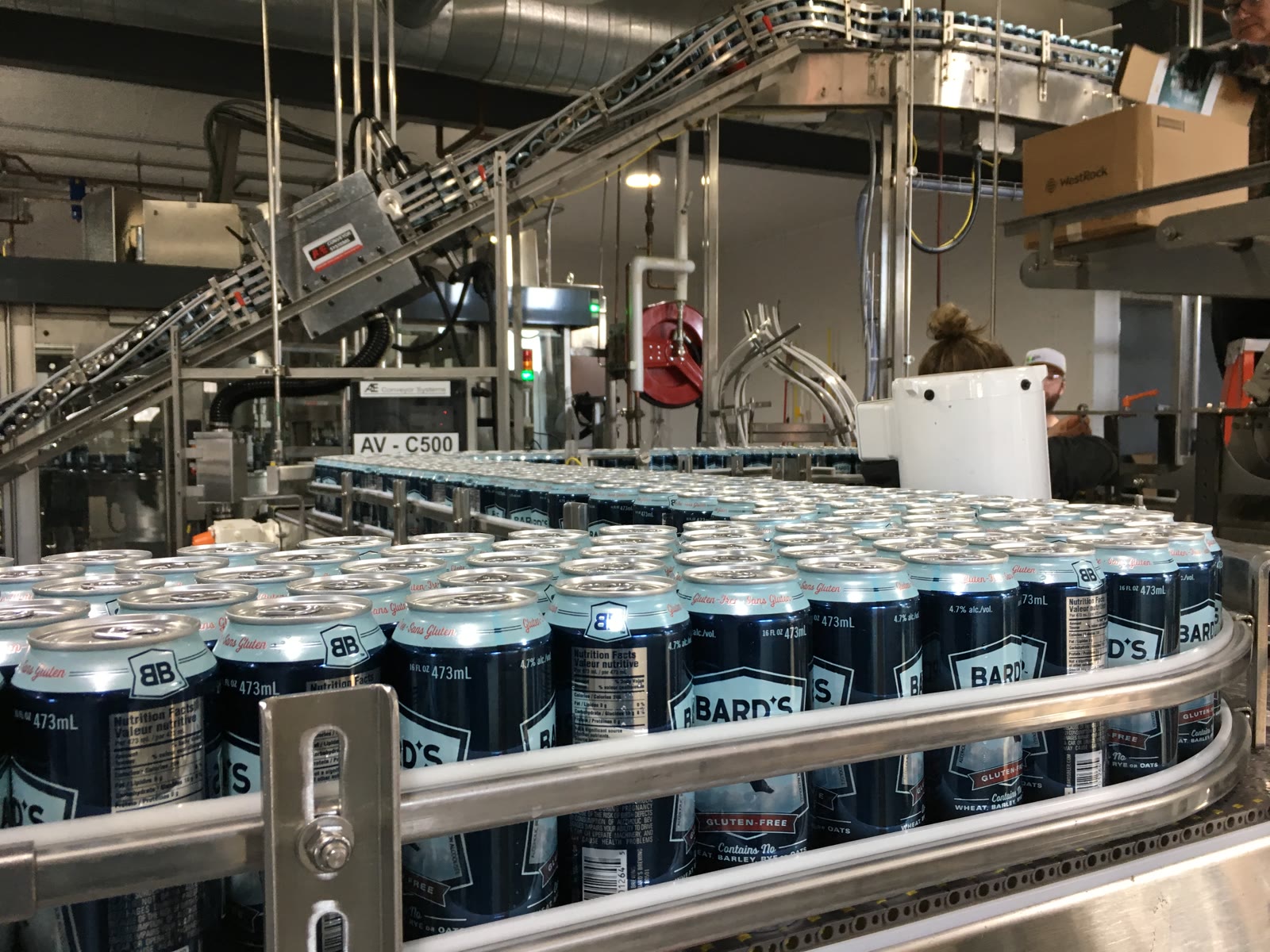
Before Bard's, the answer for a lot of people with celiac disease was brutally simple: no beer.
We founded Bard's to reject that answer and to prove something harder — that truly gluten-free beer could be brewed as real beer, from gluten-free malt, at production scale.
The breakthrough was never branding. It came from taking the grain, malt, mash, process, quality, and trust problems seriously enough to solve them as one connected system.
Bard's was not perfect, and this is not a nostalgia project. The product mattered. The knowledge matters more.
That knowledge feeds this site: what malt contributed, where barley assumptions failed, how process decisions compounded, why QA started upstream, and why the beer still had to taste good. The point is to make those lessons usable instead of leaving them trapped in old records, failed trials, and memory.
The story in order
- The No-Beer Apocalypse — the problem Bard's was built to answer.
- Building Bard's — what had to be built, learned, and proven.
- Why Malted Sorghum Mattered — the technical decision that gave the beer a grain foundation.
- What Bard's Proved — the conclusions the work earned and why they still matter.
The timeline
Every row names its source. Company documents are the contemporaneous business records held in the archive; production correspondence is the dated email record, which begins in 2016; recollection is Craig's, stated as a range where his memory is a range.
| When | What | Source |
|---|---|---|
| 2003 | Bard's Tale Research Company founded, to make gluten-free products that taste good | Company documents |
| About 2003 | The first batch brewed | Craig's recollection; the year is approximate |
| 2004 | Bard's on shelves across North America; first production, which Craig places in 2004 or 2005 | Company documents; recollection for the production year |
| 2005 to 2006 | The split-decoction trials that would not convert, and the turn to external enzymes | Craig's recollection; no batch records survive (the record) |
| November 2006 | A hired chief executive and chief financial officer take over management | Company documents |
| 2007 | Operations moved to California under the new management; the years that follow run from modest growth to stagnation | Company documents. Records from this period are sparse: the email archive holds nothing for 2015 and almost nothing before 2016 |
| 2014 to 2017 | The production QA log: four years of batch records on the flagship beer | Batch log |
| Mid-2017 | The last production run under the previous owners; last shipments early in the third quarter | Company documents |
| October 2017 | Craig, with new partners, re-acquires Bard's | Company documents (term sheet 29 September, close 31 October) |
| 2018 | Production restarts at a contract brewery, which this site does not name; the first malt batches are not expected to make saleable beer | Production correspondence |
| April 2018 to September 2020 | The sorghum program: Ivory 7 to Blue Milo #4 | Production correspondence (the record) |
| February to March 2019 | The independent finished-beer panel and three malt analyses | Published data |
| October to November 2019 | A trial fails at the enzyme label rate; the 190°F (88°C), 60-minute baseline is adopted | Production correspondence (why the baseline exists) |
| July 2020 | The V12 production sheet, the last operating document | Production correspondence (the Maltose Mash) |
| September 2020 | The last dated production correspondence held | Production correspondence |
| 2026 | Gluten Free Brewer publishes the record | This site |
What the timeline does not carry: the year the extract era began, and the year the second production run ended. Neither is in the record we hold, and the site does not guess.
The through line
The old standard was workaround beer. Bard's proved it wrong.
Real gluten-free beer needs a real grain decision, a real malt decision, a process designed for the ingredients actually in the brewhouse, and a quality system worthy of the claim on the package.
Bard's was the proof. Gluten Free Brewer is the follow-through.
For the broader reason this site exists, read Why This Site Exists.